
Toyin Falola
It is with pleasure that I lecture on decolonization at The Toyin Falola Masterclass on May 5, 2026. I am excited that over a thousand students and teachers registered for the event. It will be shared on various platforms for free use and added to the growing archives of knowledge on how to study Africa.
I write on decolonization because of the challenges that beset the African archive. In addition to these issues, some of the challenges are also a form of repression. Recognizing this after having researched Africa, it births my mission of decolonizing African studies. The mission is clear, and it is to rescue African knowledge from the mouths that stifle its existence. It is at this point of rupture that my writing begins. The process of colonization did not simply entail the dispossession of Africa’s resources but also its modes of cognition. Hierarchies were created that placed external ways of thinking above those of Africans, and this hierarchy was gradually institutionalized and passed on to generations. We find ourselves in a situation where Africans must face their past through someone else’s gaze. Not a few have become strangers to themselves. To talk of decolonization is then to challenge that alienation: to demand that Africa be seen through African lenses, categories, and intellectual traditions.
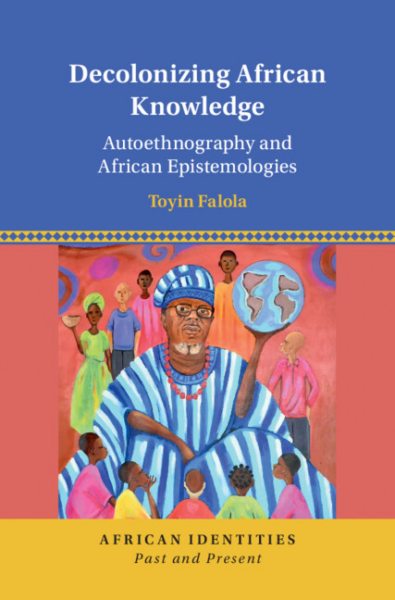
In Decolonizing African Knowledge: Autoethnography and African Epistemologies, I have restated the point that it is not the absence of African knowledge that is the problem, but rather its displacement. The need to state this same point repeatedly is crucial in that it offers a totally new way of looking at the issue being discussed. It does not mean that once there was colonization, African knowledge ceased to exist altogether. Instead, it means the displacement of African knowledge in the realm of knowledge and the making of African knowledge invisible through dominant epistemes.
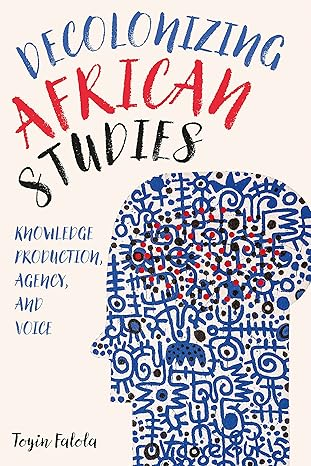
My reason for writing is rooted in the fact that the creation of knowledge is still imbalanced. In Decolonizing African Studies: Knowledge Production, Agency, and Voice, I highlighted the inherent structure of inequality in the global academy where the voice of Africa is always mediated, filtered, or even marginalized. My criticism is personal to me as a scholar. All too often, Africa is represented as a case study and not as a creator of theory. It is the theories that are brought in from outside, the questions that are asked by outsiders, and the answers that must satisfy their preconceived notions.
To write about decolonization is to reject this system. It is neither impracticable nor unrealistic. On the contrary, it is practicable and based on the reality of the distortion of history. The moment one goes back to Decolonizing African History: Knowledge Production, Agency, and Voice, it becomes obvious that it is time Africans should be empowered to tell their own history from the point of view that appreciates their own creativity and ingenuity. That is the purpose of my writing this. Africa should be seen as self-defining and not simply as a victim of actions committed against it.
As far as the reason for the necessity to write about this topic is concerned, there is the question of methodology, which should not be overlooked. One of the main features that distinguishes Decolonizing African Knowledge is its methodology, which also relies on autoethnography. Here, one uses oneself as the foundation for creating knowledge. In other words, the question of methodology challenges the outdated opposition of the subject and the object. The life experience need not be considered a stumbling block but rather can prove to be something positive. By embracing this methodology, I conclude that my own position is a chance rather than a handicap.
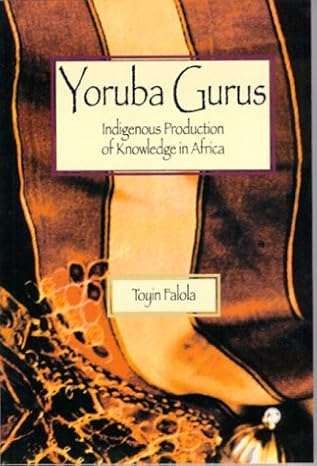
This culture-based perspective is not completely new. I developed the core concepts in my work, Yoruba Gurus: Indigenous Knowledge Production in Africa. As Yoruba Gurus demonstrate, knowledge was generated in Africa using complex and sophisticated processes. Similarly, The Power of African Cultures emphasizes that culture is intellectual in character, involving systems of thought, classification, and analysis. These works are crucial sources of information in my literary pursuits. They provide me with an avenue to connect my work to the intellectual tradition that existed long before modernity.
I write because education remains a contested space. In most instances, the curriculum remains a repository of values that are not ours alone. Some are favored over others; history, theory, and discourse are privileged while others remain marginalized. Through my writings, particularly the book Decolonizing African Studies, I have sought to point out the importance of transforming this kind of curriculum from a marginalizing one to a more embracing one of the African perspectives.
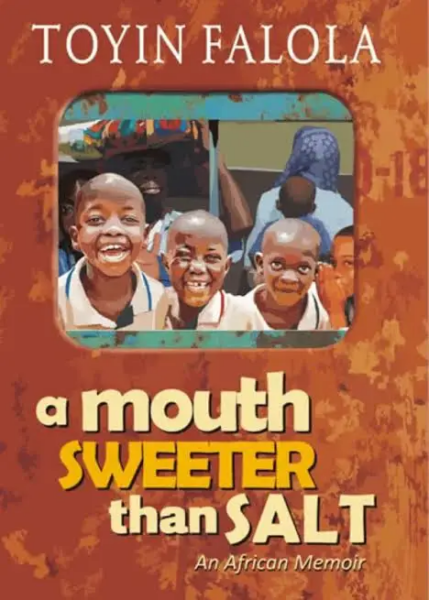
My writing is driven by the realization that the self, as represented in A Mouth Sweeter Than Salt, is an archive. However, this memoir is not just a simple autobiography; it is a scholarly interaction with history and culture. It shows how an individual’s life interacts with the process of history and culture. With this realization in mind, I seek to strike a balance between my personal story and analysis through this piece of literature. The truth is that the African narrative is not only told in the macro level but in the micro level as well. By writing, I seek to connect these two aspects of the African story. I write because Africa goes beyond its geographical borders. Diaspora disrupts simplistic notions of identity and knowledge production. My other writings, especially those exploring African and diasporic relations, reinforce this notion. The decolonization of knowledge needs to appreciate the reality that knowledge about Africa goes beyond the physical borders of Africa. Consequently, when looking at the processes of decolonization, one cannot afford to overlook these realities.
I must point out that the decolonization process is not yet completed. It will not be completed since it has no endpoint, as it symbolizes some continuous process that requires constant effort from our part. These very efforts constitute my productivity, including about a hundred books. Through my productivity, one can see that it cannot be completed rapidly; that is, there is no way to complete it by means of writing only one book or even a whole generation of books. In other words, my books are perfectly fit into such a process since they are neither meant to give some definite answers to our questions nor conclude anything but rather generate doubts. By writing, I get rid of my past corrupted already, my present, which constantly menaces me, and my future, which remains unknown to me.
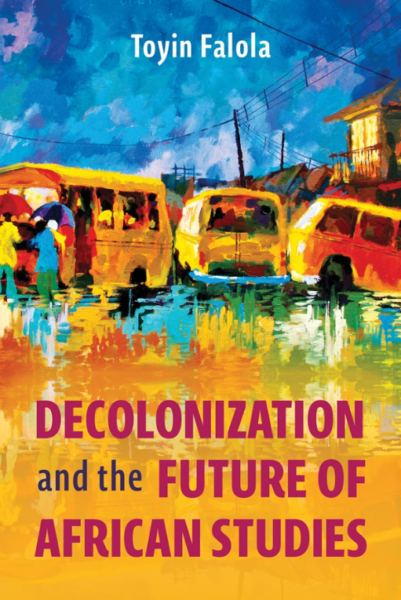
From Decolonizing African Knowledge to Decolonizing African Studies, from Yoruba Gurus to A Mouth Sweeter Than Salt to other works on decolonization, I situate my writing within a broader intellectual project. That project is not just about critique; it is about creation. It is about building a body of knowledge in which Africa is not peripheral but central. To write on decolonization, then, is to accept a responsibility. It is to recognize that knowledge shapes reality and that changing one requires engaging with the other. My writing is one contribution to this effort. It is an attempt to ensure that Africa is not only written about but that it writes itself—clearly, confidently, and on its own terms. To write on decolonization is no mean feat. It involves posing some difficult questions and challenging the status quo and prevailing views. This is because decolonization of one’s mind is intertwined with other aspects of decolonization. This is an aspect of the struggle. It is a move towards ensuring not only that Africa is spoken of but that Africa speaks for itself. In a book to be released in the next two months, Decolonization and the Future of African Studies, I outlined how decolonization studies can become edible to be put to good use to transform knowledge systems and the continent.
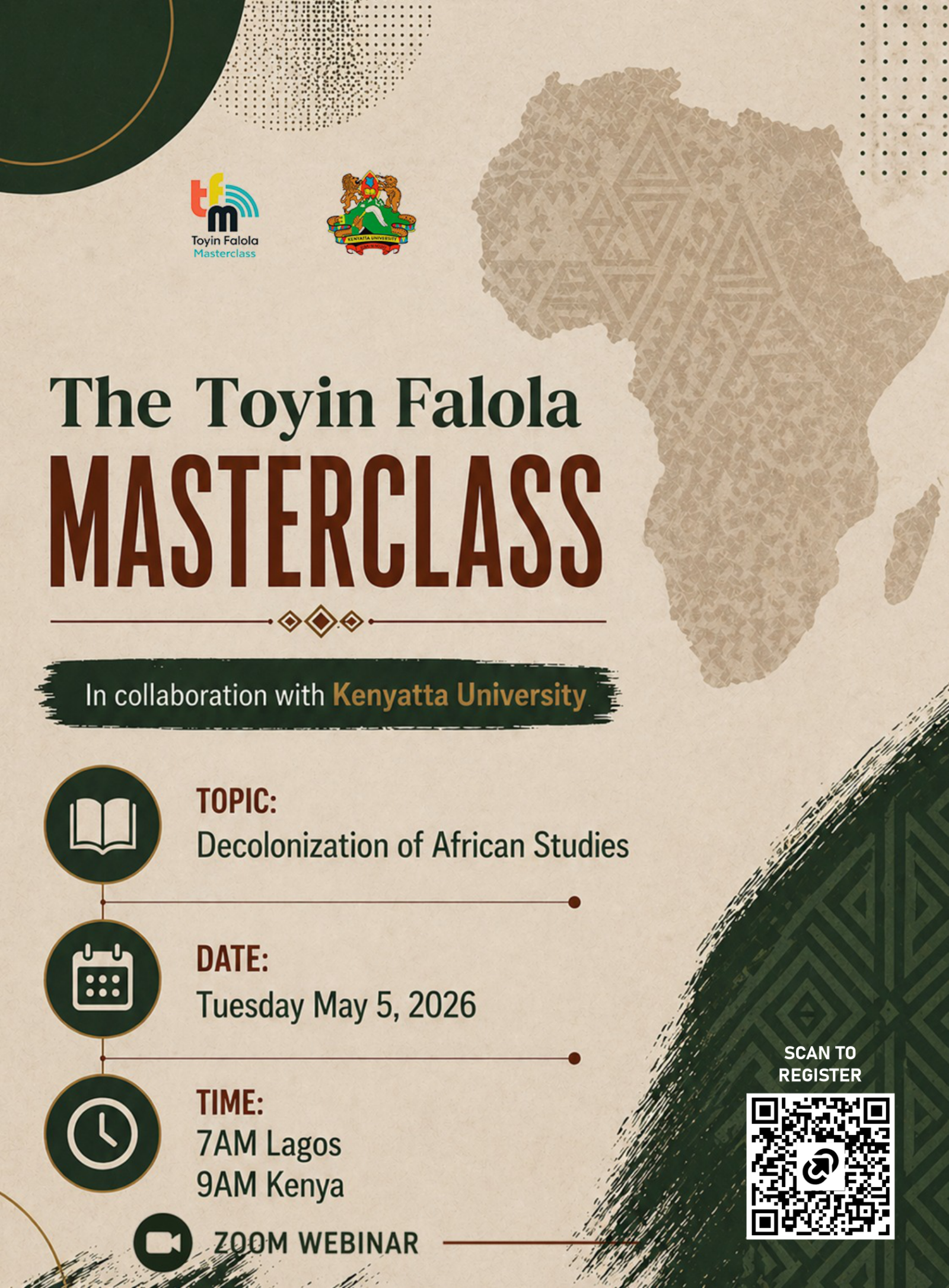
The Toyin Falola Masterclass: Decolonization of African Studies
Free online masterclasses by experts geared towards providing the intellectual and practical tools for exploring and analyzing Africa’s past and present. Classes will encompass debates and questions about Africa, as well as practical tips on how to study Africa from multiple perspectives.
Tuesday, May 5, 2026
1 AM Austin
7 AM Nigeria
8 AM South Africa
9 AM Kenya
Join Zoom Meeting
https://us02web.zoom.us/j/81953607018
Register Here:
https://tinyurl.com/TFMasterclassAfriStud
Watch on YouTube:
https://youtube.com/@tfinterviews/live
Thought-provoking!
His call for epistemic decolonization ,ending Eurocentric monopoly on ‘truth’ provides a powerful framework for scholars to validate indigenous archives and oral traditions as legitimate sources of history.
The article by Toyin Falola explains why he writes about decolonization, especially in African studies. His central argument is that African knowledge has not disappeared but has been displaced and marginalized due to colonial influence. Colonialism did not only take resources; it also imposed foreign ways of thinking that made Africans view themselves through external perspectives. As a result, Africans often become “strangers to themselves.”
Falola stresses that decolonization is about reclaiming African identity and knowledge systems. He challenges the global academic system where Africa is treated mainly as a subject of study rather than a producer of knowledge and theory. According to him, true decolonization means allowing Africans to tell their own stories using their own intellectual traditions and frameworks.
Another important point in the passage is the issue of methodology. Falola highlights the use of autoethnography, where personal experience becomes a valid source of knowledge. This challenges the traditional separation between subject and object in research and shows that African lived experiences are valuable in knowledge production.
He also emphasizes that education and curriculum are still influenced by colonial structures, often privileging foreign ideas over African perspectives. Therefore, reforming education is necessary to make it more inclusive and representative of African realities.
Finally, Falola concludes that decolonization is a continuous process without a fixed endpoint. His writings aim not to give final answers but to raise critical questions, challenge dominant narratives, and contribute to building a body of knowledge where Africa is central rather than peripheral.
In summary:
The passage argues for the restoration, recognition, and empowerment of African knowledge, voices, and perspectives in global scholarship, while emphasizing that decolonization is an ongoing intellectual and cultural struggle.
The article by Toyin Falola highlights how colonization shaped not only politics but also African knowledge and identity. It strongly supports the need for Africans to reclaim their voice, especially in education. However, it focuses more on the problem than on practical solutions, which makes it less clear how decolonization can be implemented.
Learned more about colonization