
Toyin Falola
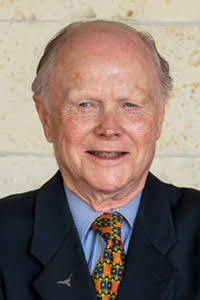
The legacies of empires remain long after they have lowered their flags and lost their territories to independence. Questions of who built these empires, who resisted them, why they failed, and what they meant for their colonies and subjects inspired a lifetime of work by Professor William Roger Louis, a distinguished historian of British imperialism, who died on Friday, October 23, 2026, at 90. Professor Louis’s work greatly advanced our understanding of the British Empire’s creation, expansion, and collapse, as well as its impact on Africa, Asia, and the Middle East. His death marks the loss of an intellectual archive, including his books, ideas, and the discussions he initiated.
Born in Detroit on May 8th, 1936, Professor Louis grew up in Oklahoma City, where he developed a passion for international affairs and history. He went on to graduate from the University of Oklahoma. He then went to study the British Empire at St Antony’s College in Oxford. While at Oxford, he became involved in many issues of the time, such as imperialism in Europe, nationalism in colonies, and the empire’s global impact. All of these influenced his approach to history. Using primary sources from archives, comparisons, and in-depth studies on certain political decisions made during that time. Professor Louis wrote his doctoral thesis, “Ruanda-Urundi, 1884–1919,” which was published in 1963. It examined what is now known as Rwanda and Burundi under European domination. He was able to examine European growth in Africa. This led him to want to know more about European dominance in African countries using primary sources.
The dissertation defined key themes in the professor’s future work and highlighted its focus on the international dimension of colonialism. Rather than treating a particular territory’s experience as isolated, Professor Louis examined how shifts in international relations and rivalry among European powers shaped colonial policy worldwide. This approach became a distinctive feature of his scholarly career, linking decisions made in European capitals to processes unfolding in Africa and other colonies.
Professor Louis began his teaching career at Yale University. He joined the University of Texas at Austin in 1970, and it remained his home for many years. He was a Distinguished Teaching Professor and held the position of the Kerr Chair in English History and Culture. His research interests included British imperial expansion, colonial administration, diplomacy, and the process of decolonization after the Second World War. Professor Louis also researched Britain–Germany relations in Africa, U.S. influence, and the transformation of the Middle East.
His book Imperialism at Bay: The United States and the Decolonization of the British Empire, 1941-1945, published in 1977, examines US-British imperial relations during the Second World War. The book offers readers another perspective on how Europe lost its empires, driven by competition with other countries, changes in the global economy, and the rise of new world powers. He also wrote about the Palestine mandate, oil nationalism in Iran, the Suez crisis in 1956, and Iraq’s revolution in 1958. All his published works show his interest in nationalism and the competition among world powers for control.
Professor Louis had many interests, but they all came down to one question. How did Empires work? How did they react to challenges and evolve in an ever-changing world? One of his major accomplishments was editing The Oxford History of the British Empire. This book was published in 5 volumes in 1998 and 1999. With over 120 contributors, including my humble self, the book covers the British Empire from its beginnings to its fall and ends with its impact on us today. The Oxford History allowed different areas and experiences, as well as historians, to connect and provide many sources to study the British Empire politically, economically, culturally, and internationally.
Professor Louis also served as president of the American Historical Association in 2001 and helped found its National History Center to raise public awareness of the importance of historical research. He also served on the U.S. Department of State’s Historical Advisory Committee and chaired it until 2008, when he resigned in protest. Professor Louis appreciated the need to go beyond academic lectures and scientific journals to present the results of historical studies; he recognized that historians must make people and politicians familiar with history to develop a serious understanding of it. Professor Louis received many awards and honors throughout his life, including election as a member of the British Academy, election as a fellow of the American Academy of Arts and Sciences, and appointment as a Commander of the Order of the British Empire.
However, beyond these achievements, he was known among his colleagues and students as an experienced teacher, always ready to discuss innovative ideas, and he gained recognition as a man of wide knowledge and an ability to influence his audience. For African historians and scientists, the professor’s death offers an opportunity to reflect on the relevance of research on colonialism, nationalism, and international relations in Africa’s history. In Professor Louis’s research, Africa played a major role, giving him insight into European rivalry, colonial administration, and the transition from colonial rule to national governments. The Ruanda-Urundi research and the edited books concerning Britain, Germany, and France in Africa became the basis for comparative research in the field. In terms of interest in the relationship between African history and international politics, territorial partition, rivalry among European powers, and changing imperial priorities defined the historical background of the colonial period in African history.
Professor Louis taught at the University of Texas at Austin for about fifty years and became one of the outstanding historians of British history and imperialism. When he left the university in 2020, he had established a remarkable legacy of historical research that became the subject of specialists’ debates and technical discussions, as well as classroom teaching that conveyed knowledge effectively while making it accessible.
The combination of research and teaching is evident in Professor Louis’s work. He combined his interest in archival details with questions about the motives behind government decisions and changes in international relations and political systems. These questions allowed students to learn about events through interpreting facts, comparing accounts, and separating history from assumptions. In many ways, Professor Louis’s books, editorial work, teaching, and professional involvement have contributed to our understanding of the history of British imperialism and its international relations. Indeed, history is not simply a list of names, dates, and magnificent events. Instead, it is an ongoing effort to understand how societies are created, how power is exercised, and how the past influences future generations.
African scholars now continue studying the colonial past while placing African experiences, ideas, and activities at the center of their historical narrative. Historical records should remain open to new interpretations, and the process of study continues beyond a single scholar’s life. A scholar like me, who processes data from the below—victims of empires that Roger praises—can disagree with him, but his contributions cannot be marginalized. Vigorous new writings on decoloniality should continue complicating many of Professor Louis’s ideas in complex, radical traditions.
This may be the end of Professor Louis’s personal story, but not of the historical questions that have driven it. He spent almost nine decades living in a world transformed by wars, decolonization, and the rise of new centers of power, dedicating much of his life to explaining these processes through the study of the history of empire. Now, the historian becomes part of the history that he spent a lifetime explaining.
Professor Louis’s books remain, his questions endure, and generations of scholars will continue the intellectual conversation he started. His rich legacy remains as an example of dedication to the pursuit of knowledge. His life shows the value of historical research, and his work invites future historians to examine evidence and assumptions as they study the complexities of the past.
While, he reached a great age, it is still a bit of a shock to hear if his passing. I only met Professor Louis a few times but was very familiar and inspired by his work as we had similar research interests including Suez, the Middle East, Empire and Southern Africa in the post 1945.
When I was a PhD student back in the 1990s and I was carrying out work at the LBJ library in UT, I chanced my arm and called into his office in the Harry Ransom Center to ask advice about my topic on Britain and Nasser. He took the time out of his undoubtedly very busy schedule and generously spoke to me for a half hour.
On another occasion, he brought me with (the also sadly recently deceased) John MacKenzie and Stuart Ward among others for dinner at his club in Austin. His rather serious demeanour when he spoke in public belied a a very nice and kind gentleman, who wore his erudition lightly. Few have contributed so much to study of Britain and its empire. While he was an Anglophile and clearly loved Britain, he was by now means an uncritical friend. He will be greatly missed by his close friends and colleagues across two countries.